

The first wave of enterprise AI adoption was largely centered around individual agents. A business would identify a repetitive workflow, connect a language model to a retrieval system or a few operational tools, and deploy an AI assistant capable of handling a specific set of tasks. In many early-stage implementations, this worked well enough. Teams […]
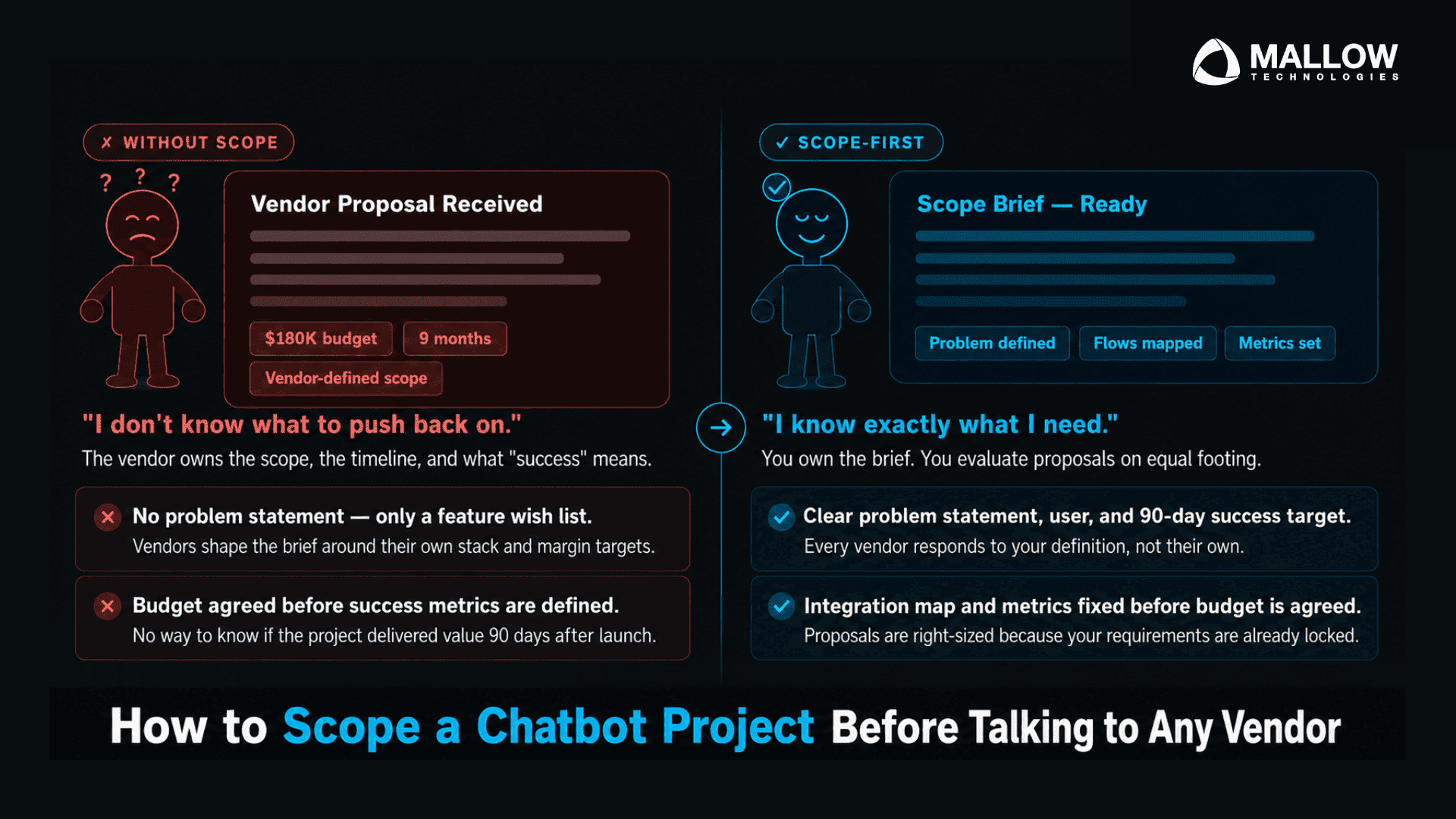
Most founders walk into their first vendor call for a chatbot project with a rough idea, a budget range, and a lot of optimism. They come out two weeks later with a proposal that costs twice what they expected, covers three times what they asked for, and includes a six-month timeline they do not fully […]
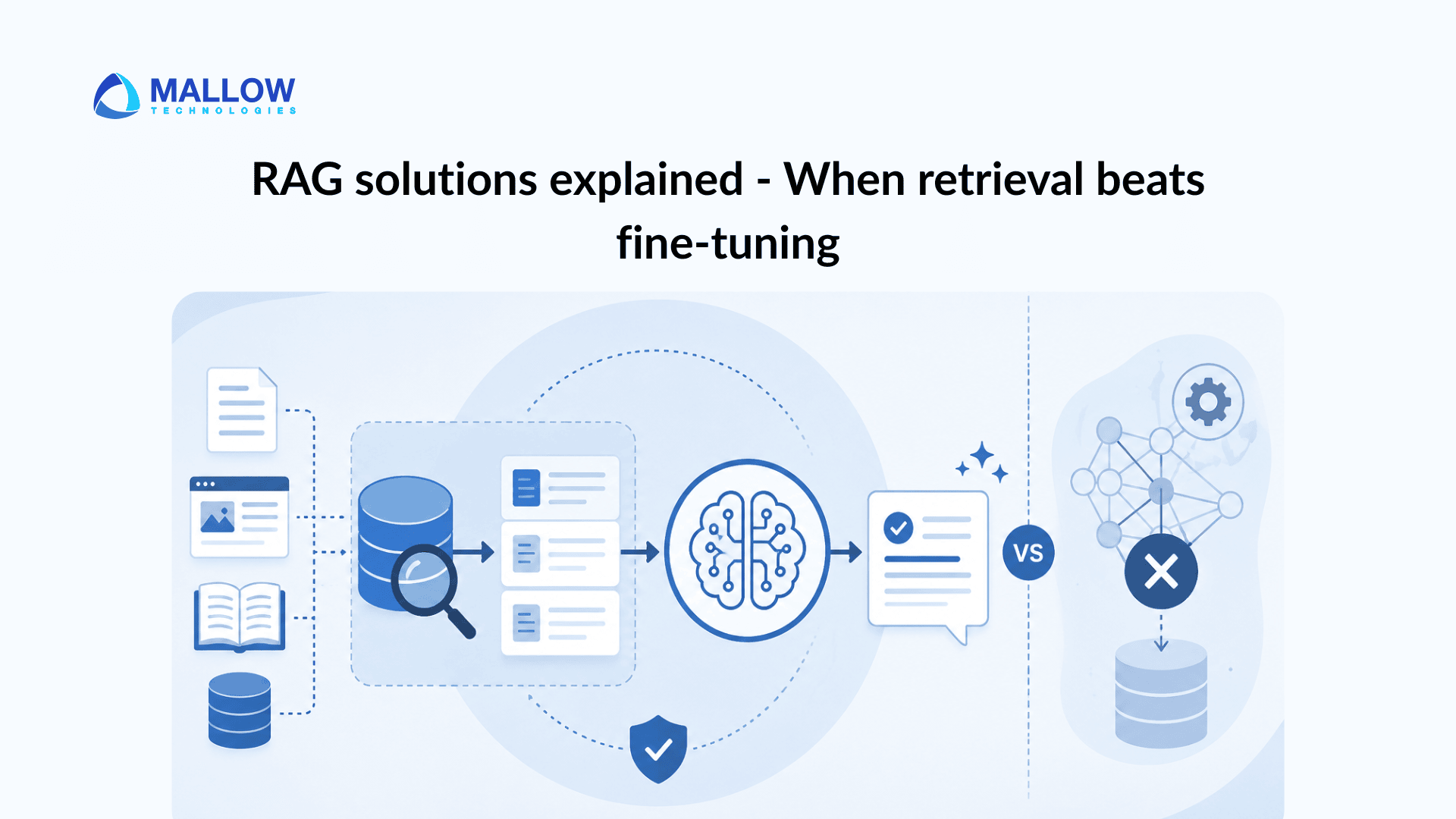
Enterprise AI conversations have changed dramatically over the last year. A short while ago, most discussions revolved around model capabilities. Businesses were fascinated by how large language models could generate content, summarize information, write code, or answer questions conversationally. Now the conversation is becoming more operational. Companies are asking a much more practical question – […]
AI agents are quickly moving from experimental technology to operational infrastructure. Businesses are no longer exploring AI only for chatbots or internal productivity experiments. They are beginning to evaluate how AI systems can coordinate workflows, interact with enterprise tools, automate decision-making, and reduce operational overhead across departments. That shift has created a new challenge. Finding […]
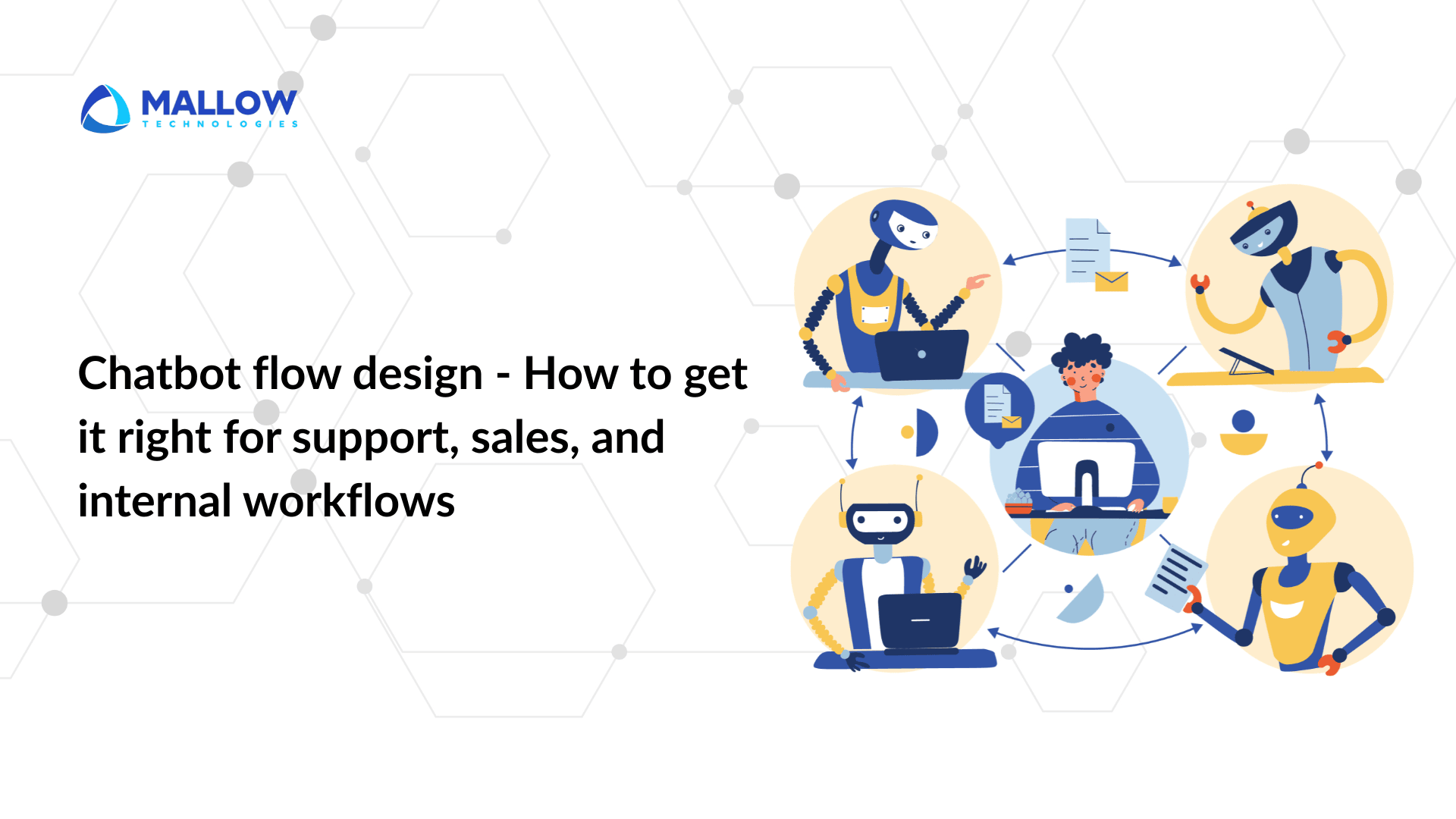
When a chatbot fails, the instinct is to blame the technology. The model is not smart enough. The platform is too rigid. The answers are too generic. In most cases, the technology is not the problem. The flow is. A chatbot flow is the logic that determines what the bot does next at every point […]
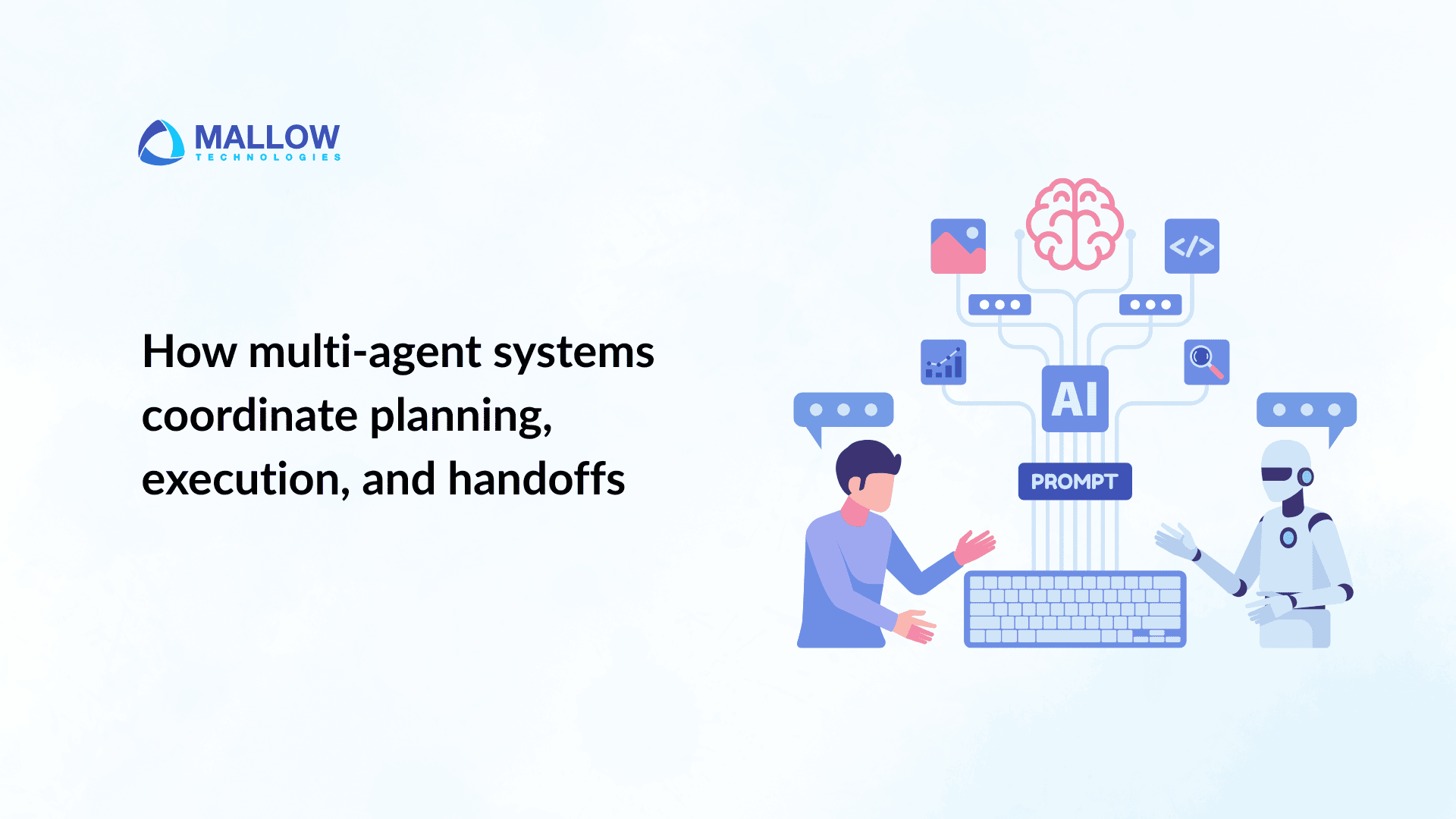
The most common reason multi-agent systems fail in production is not that the underlying models are wrong. It is that the coordination between agents breaks down. Individual agents may perform well in isolation. The architecture connecting them does not hold under real conditions. The MAST study, presented at NeurIPS 2025, analysed 1,642 execution traces across seven state-of-the-art multi-agent frameworks. Failure rates ranged […]
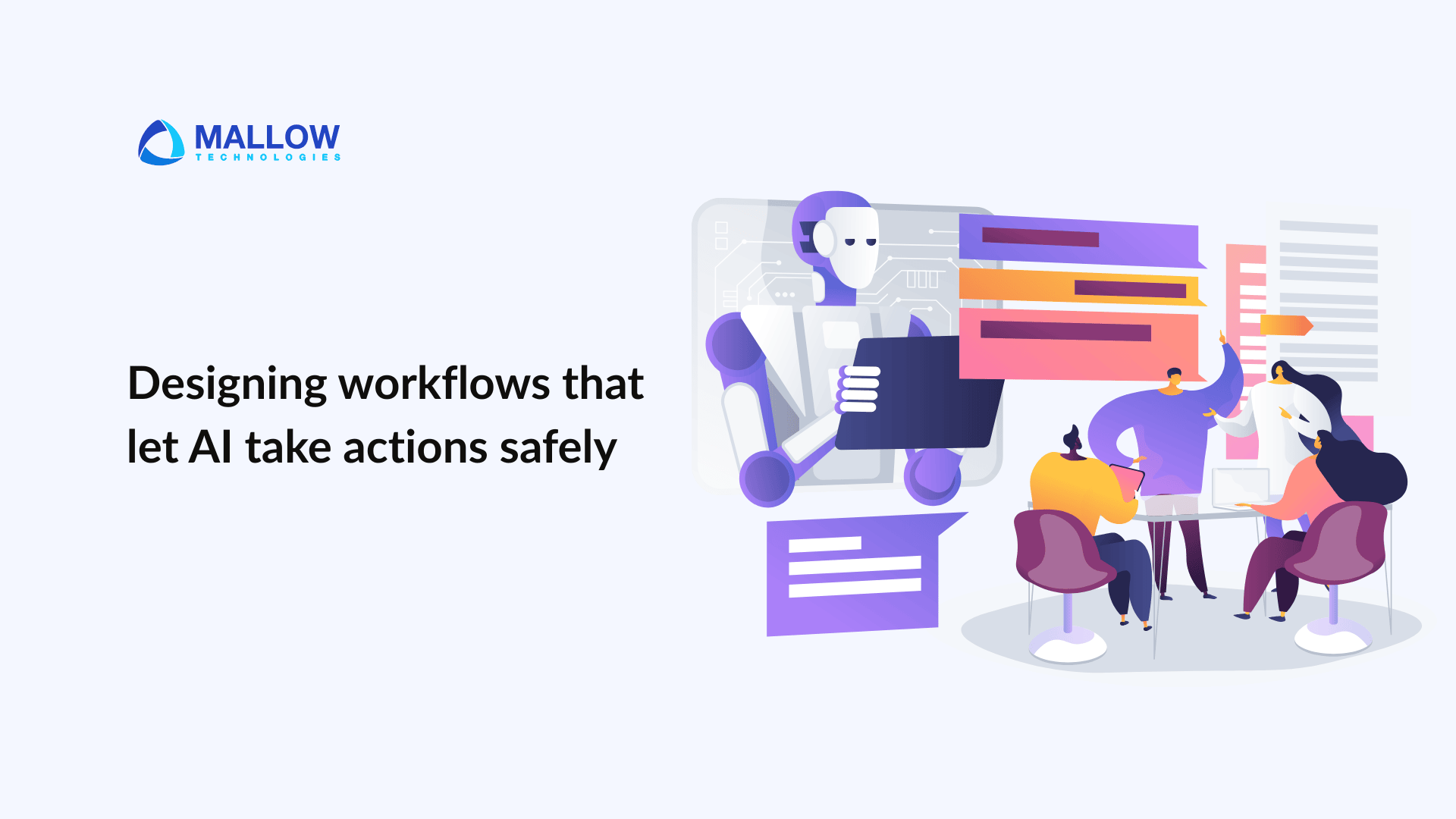
For most of the last decade, enterprise AI systems were largely observational. They generated predictions, surfaced recommendations, summarized information, or helped employees retrieve knowledge more efficiently. Even when automation systems became more advanced, the final operational action was usually still initiated by a human user somewhere in the workflow. That boundary is now beginning to […]
AI adoption inside enterprises is rapidly evolving. Businesses are no longer experimenting with AI only for chatbots or content generation. The focus is shifting toward AI systems that can reason, coordinate tasks, interact with software tools, and execute workflows with minimal human intervention. This is where AI agent development is becoming increasingly important. Modern AI […]
Most fine-tuning projects produce a version of the same ROI presentation – the model outputs look better, the team is happy, and the loss curves improved during training. Then someone from finance asks what the dollar return is, and the answer is “we estimate it saves about two hours per week per engineer.” That number […]
Fine-tuning an AI model is no longer the expensive, infrastructure-heavy operation it was two years ago. Compute costs have dropped significantly, tooling has matured, and the knowledge required to run a training job is more accessible than it has ever been. That accessibility has a consequence – businesses are committing to fine-tuning before they understand […]