

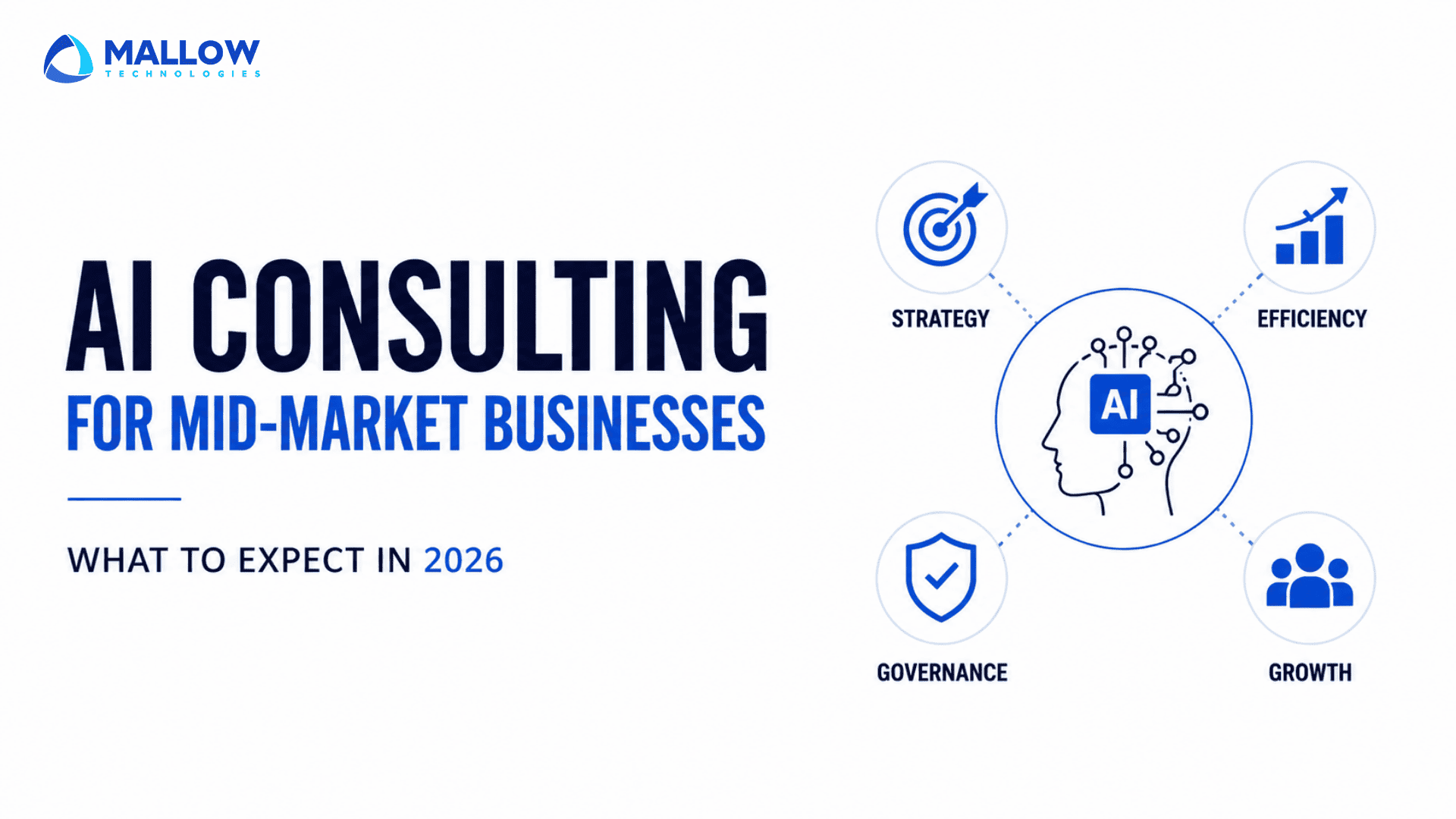
Artificial intelligence has reached a point where most mid-market companies are no longer asking whether they should adopt AI. The real question has become – how do we implement AI without wasting money, disrupting operations, or ending up with another failed technology initiative? That shift explains why AI consulting has become one of the fastest-growing advisory […]
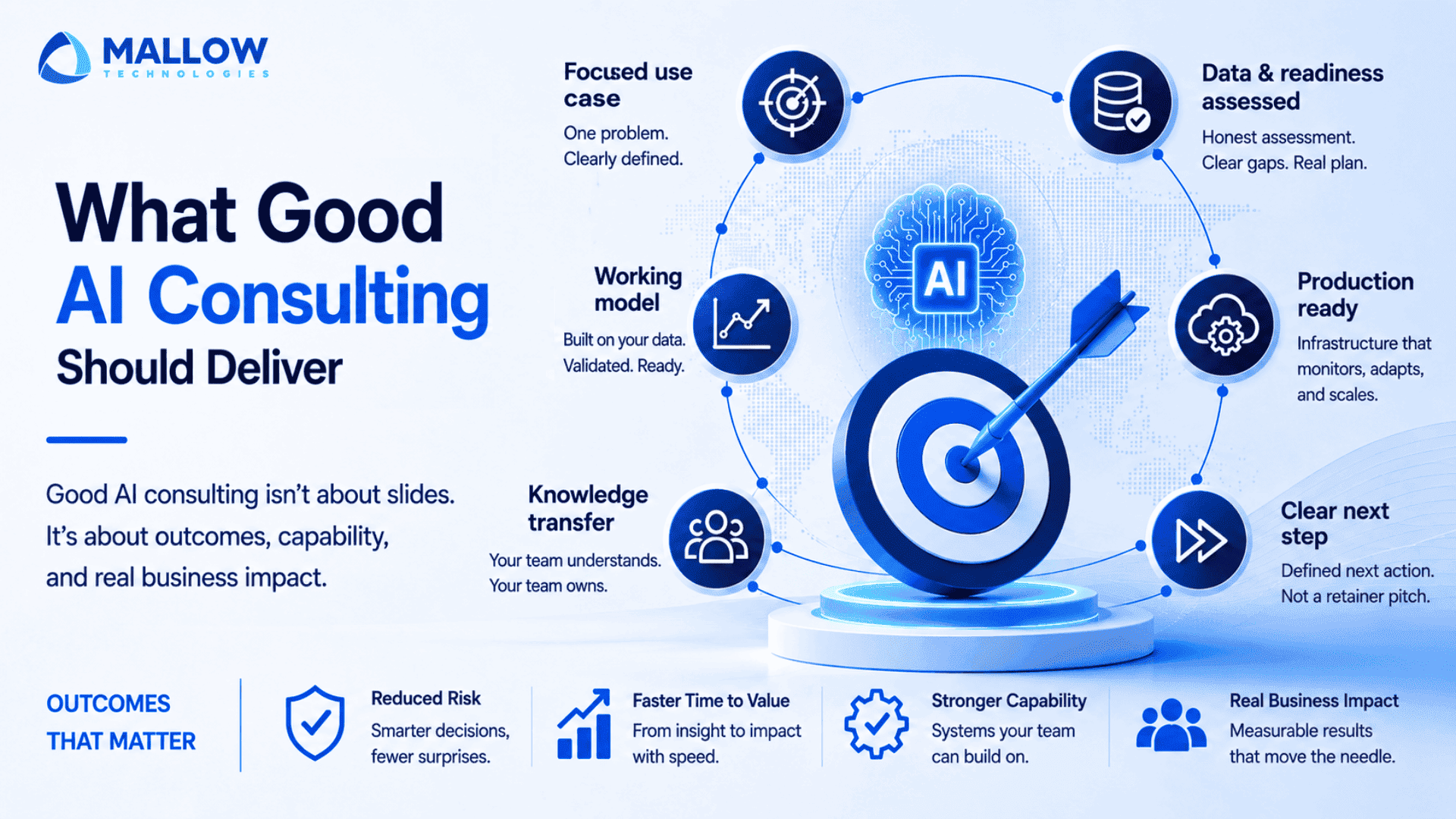
You hired an AI consulting firm. They ran workshops. They interviewed your team. They produced a comprehensive AI strategy presentation with a technology roadmap, a list of recommended vendors, and a prioritised list of use cases. The engagement closed. You have a deck. Six months later, nothing has been built. This is the most common outcome of AI consulting engagements. […]
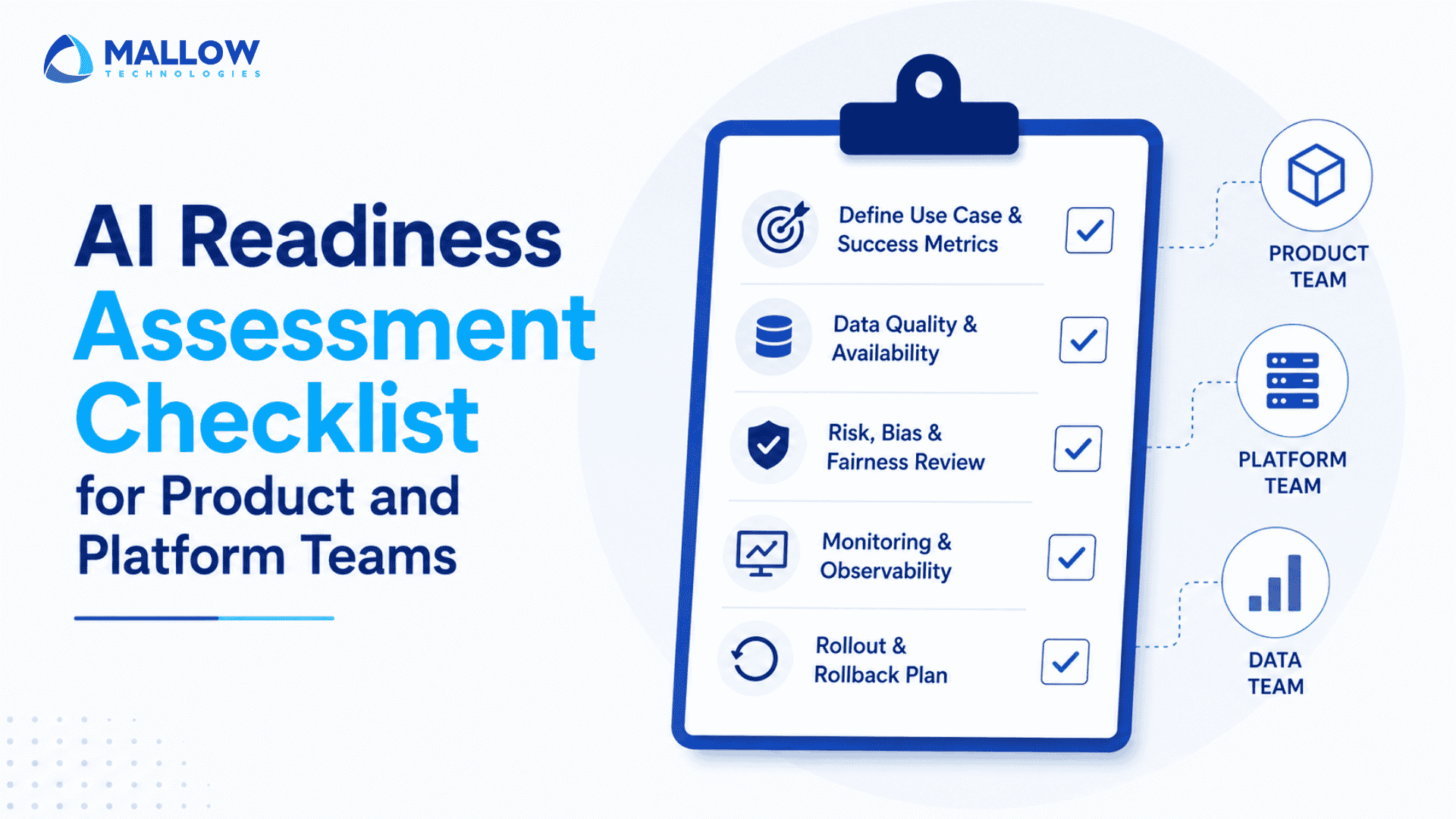
You are two weeks from shipping the AI feature. The model is trained. The endpoint is deployed. The product manager has written the release notes. And then someone asks: “has anyone actually checked whether the rollback plan is documented?” That question, asked two weeks before launch, is manageable. Asked two days after launch when the model starts producing […]
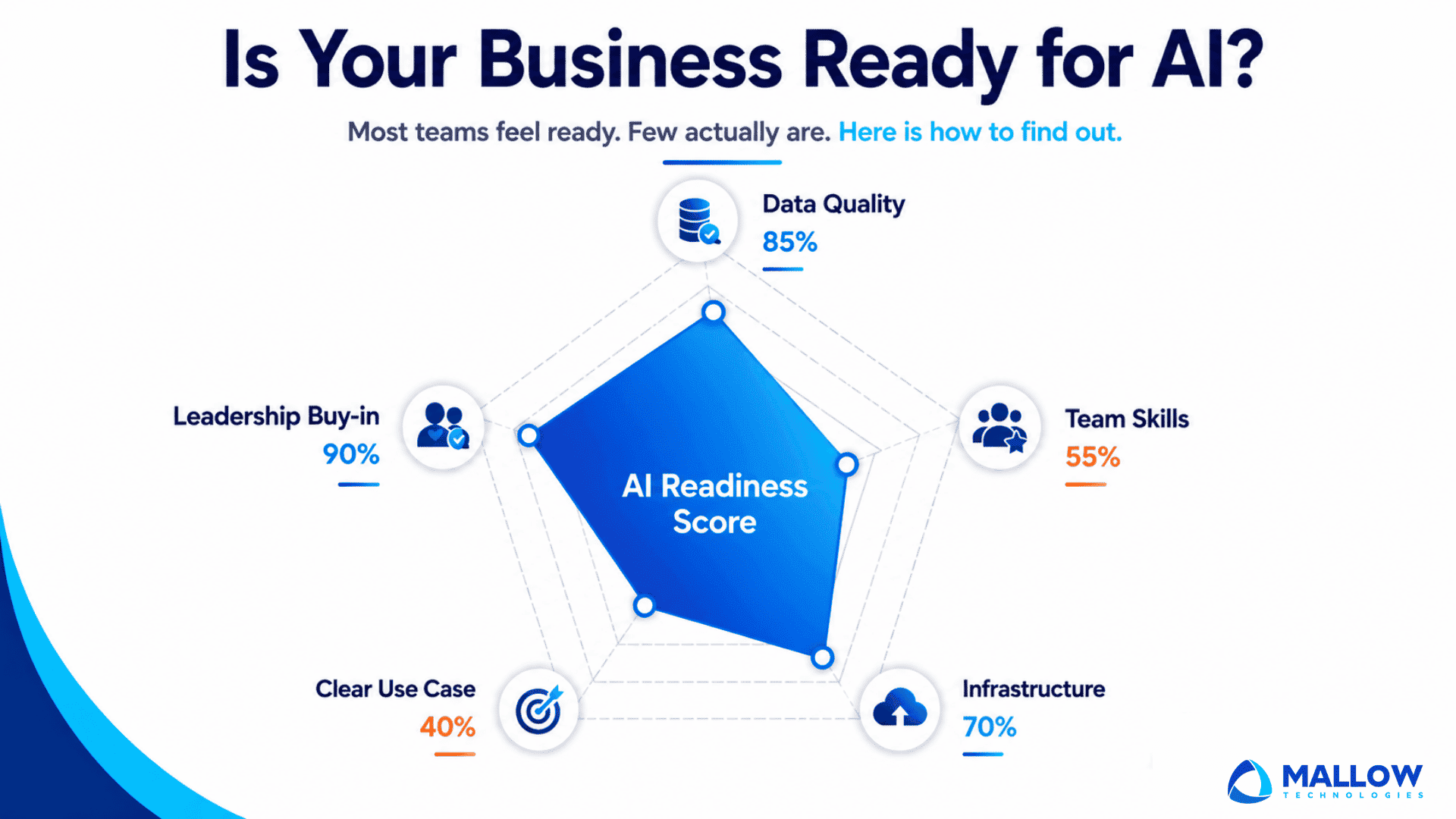
The conversation in your last board meeting probably included the phrase “we need to be doing more with AI.” Your investors are asking about it. Your competitors are announcing it. And somewhere in the middle of all that, you are trying to figure out whether your organisation is actually in a position to build something that works. The honest […]
Building a GenAI prototype is not the hard part. The demo works. The outputs look convincing. The team is excited. The hard part is everything that comes next. According to Gartner’s April 2026 analysis of GenAI project failures, at least 50 percent of GenAI projects are abandoned after proof of concept. Of the projects that do proceed, […]
Ask most engineering teams when they chose between RAG and fine-tuning and the honest answer is – before they fully understood the problem they were solving. A proof of concept gets built with whichever approach the team was most familiar with. That approach either works or does not. If it does not, the other approach […]
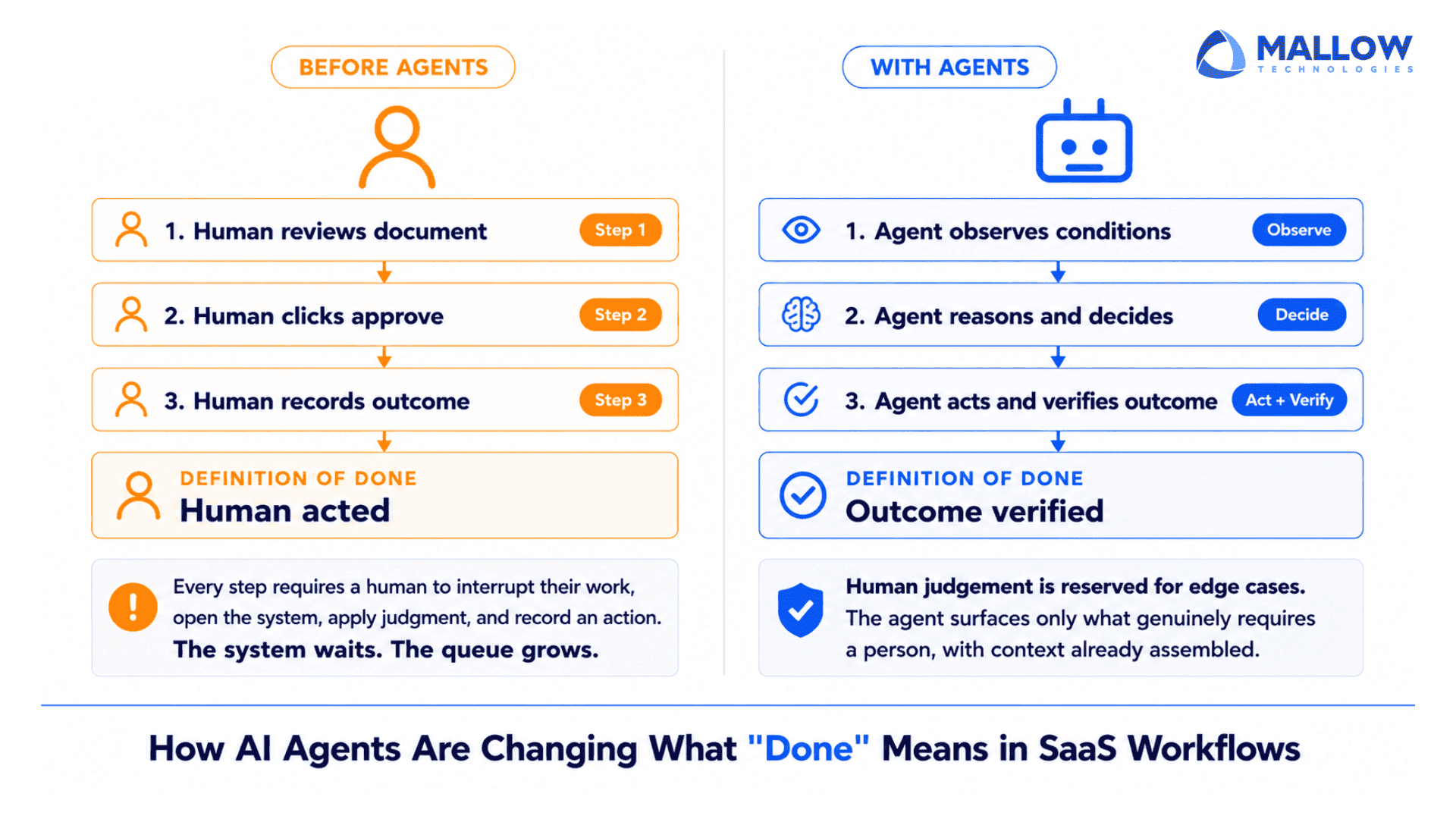
Most conversations about AI agents in SaaS circle around the same question – what can it automate? That is a reasonable starting point, but it is the wrong frame for the more significant shift that agents introduce. The deeper change is not about speed or task reduction. It is about the definition of a completed […]
For years, enterprise automation has largely operated on a predictable principle: define the rules, structure the workflow, and let the system execute repetitive tasks efficiently. That model helped businesses streamline a wide range of operational processes. Teams automated approvals, ticket routing, invoice processing, notifications, onboarding flows, and customer support escalations through predefined logic built into […]
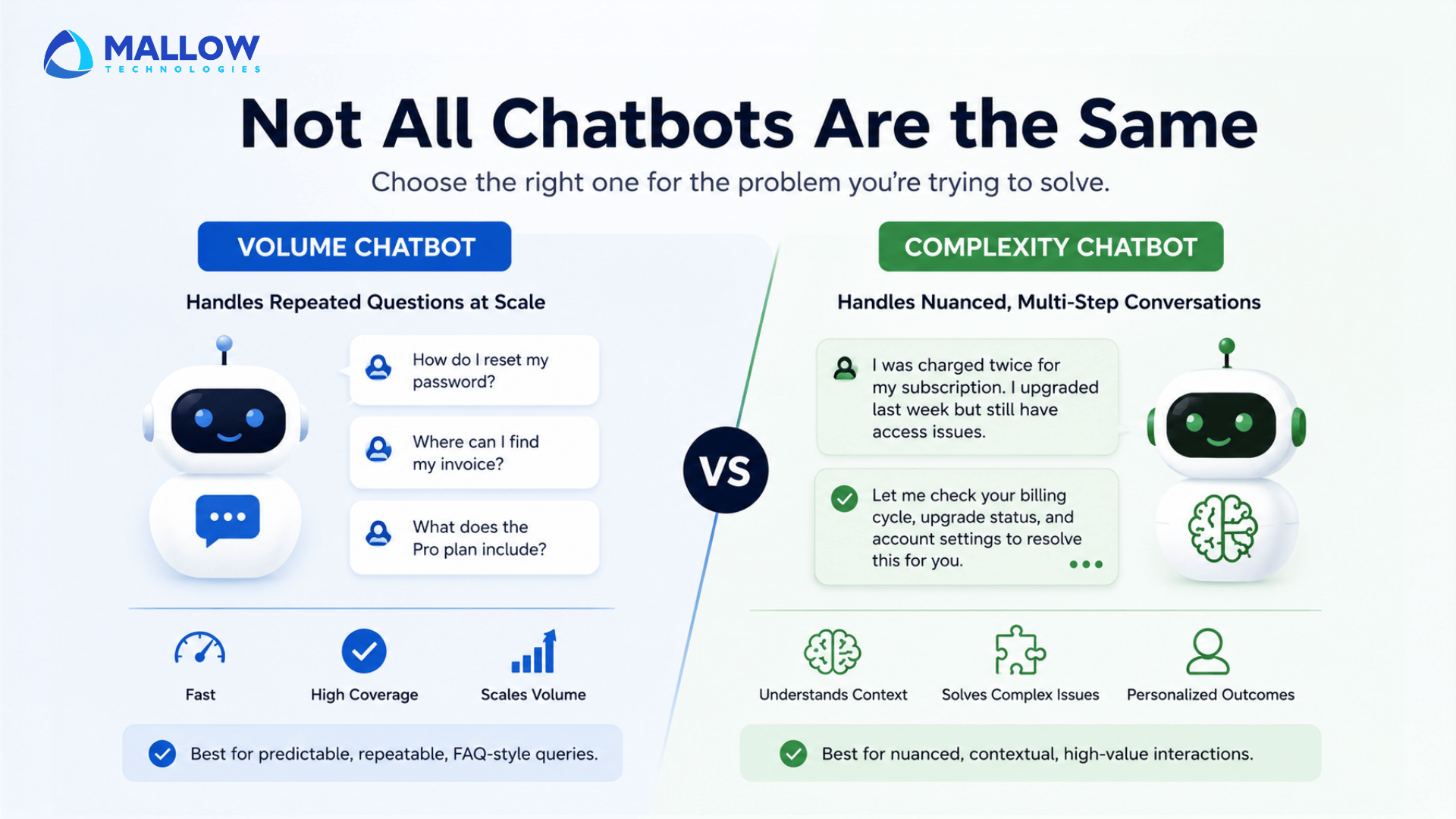
Most SaaS founders who deploy a chatbot are solving a volume problem. The support queue is full of the same questions. The tier-one team is spending most of its time on things that should not require a human. A chatbot that deflects those queries frees the team to work on what actually needs them. That is […]
Enterprise AI projects usually begin with excitement. A team experiments with a large language model, uploads a few internal documents, asks some questions, and suddenly the possibilities feel enormous. Employees can retrieve information conversationally. Customer support responses become faster. Internal search appears dramatically smarter. For a brief moment, it feels like the organization has solved […]