For years, enterprise automation has largely operated on a predictable principle: define the rules, structure the workflow, and let the system execute repetitive tasks efficiently. That model helped businesses streamline a wide range of operational processes. Teams automated approvals, ticket routing, invoice processing, notifications, onboarding flows, and customer support escalations through predefined logic built into workflow engines and enterprise software systems.
The approach worked well because most automation environments were relatively deterministic. Inputs were predictable, workflows followed fixed paths, and exceptions could usually be managed through additional rules layered into the process over time.
But enterprise operations are no longer as structured as they once were. Business environments now generate far more ambiguity, unstructured information, and cross-functional complexity than traditional automation systems were originally designed to handle. Teams increasingly work across fragmented tools, evolving operational policies, dynamic customer expectations, and continuously changing business conditions.
This is exactly where conventional automation begins reaching its limits. A rules-based workflow can execute predefined instructions extremely well. What it struggles with is contextual reasoning. It cannot easily interpret intent, evaluate multiple information sources dynamically, adapt to unfamiliar situations, or make judgment-based workflow decisions when the environment changes unexpectedly. That gap is one of the primary reasons enterprises are now shifting toward agentic AI workflows.
The transition is not simply about adding generative AI into existing automation pipelines. It represents a broader architectural evolution where workflows move from static execution models toward systems capable of reasoning, planning, memory, contextual understanding, and adaptive orchestration. In many organizations, this shift is quietly becoming one of the most important transformations happening in enterprise software infrastructure.
Why traditional automation starts breaking down in modern enterprise environments
Most legacy automation systems were built around highly structured process assumptions. An event occurs, predefined rules trigger, and the workflow proceeds through a deterministic sequence of actions. The system behaves consistently because the operational environment itself is relatively controlled.
That model becomes harder to maintain when workflows begin involving –
- unstructured documents
- conversational inputs
- evolving business policies
- multi-system coordination
- contextual decision-making
- unpredictable user behavior
For example, consider a traditional customer support automation flow.
A ticket arrives. The workflow categorizes the request based on fixed keywords, assigns a priority level, routes it to a department, and generates templated responses where applicable. That process works adequately for straightforward scenarios. But modern enterprise support environments rarely remain straightforward for long.
Customers may describe issues conversationally. Context may exist across previous interactions, CRM records, knowledge bases, internal documentation, and operational systems simultaneously. Certain cases may require interpreting urgency, identifying intent, escalating dynamically, or coordinating across multiple teams depending on business impact. Traditional automation systems struggle in these environments because they primarily execute instructions rather than reason through context.
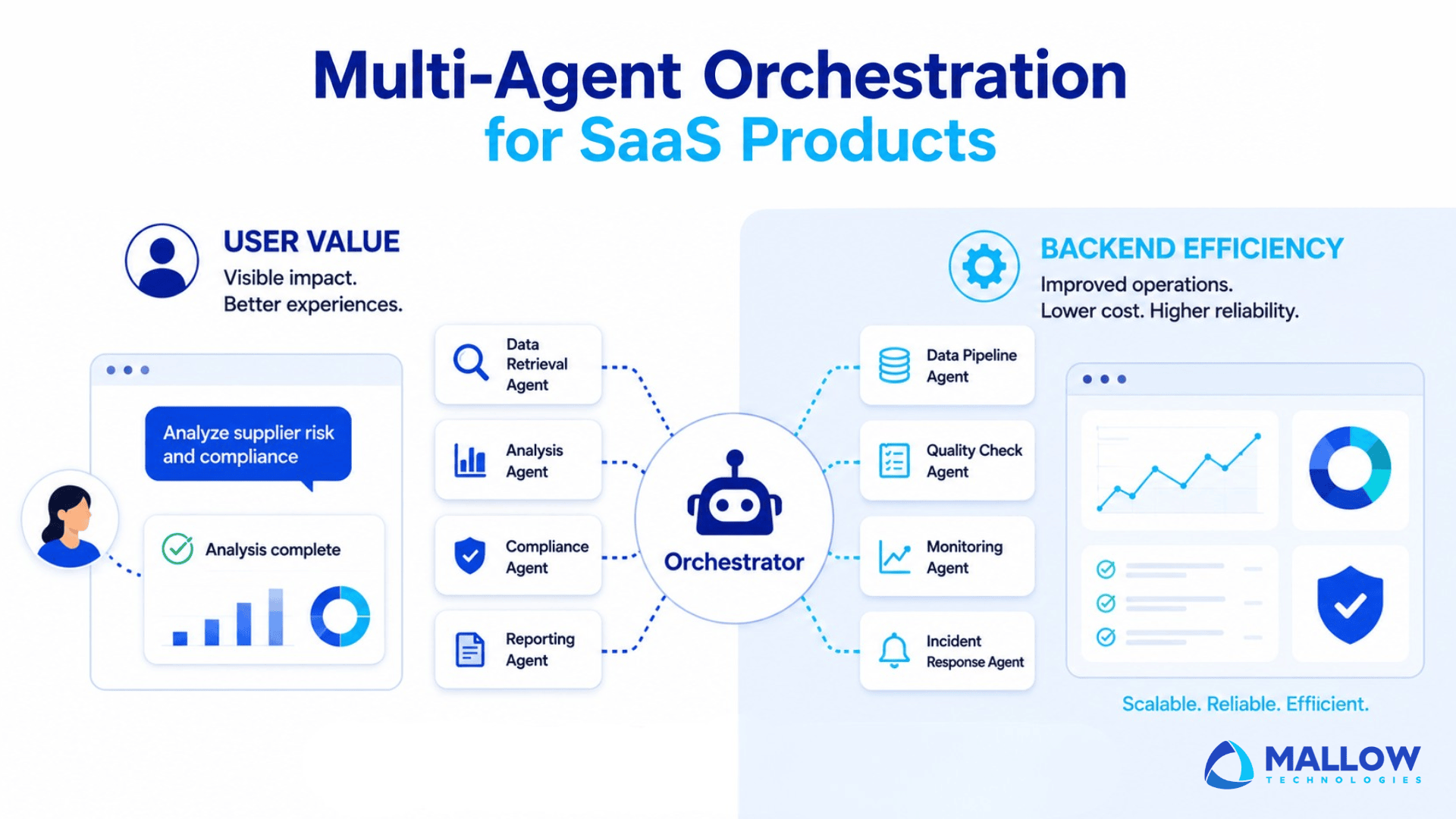
Agentic AI workflows approach the same problem differently. Instead of relying entirely on predefined workflow paths, AI agents can dynamically interpret operational context, retrieve relevant business knowledge, evaluate dependencies across systems, and adapt execution decisions as conditions change. Product and engineering teams exploring operational AI systems can also read our guide explaining how agentic workflows coordinate reasoning, execution, and adaptive orchestration across enterprise environments. That shift fundamentally changes how modern enterprise workflows operate.
Agentic AI is less about replacing automation and more about expanding its capabilities
One of the more common misconceptions surrounding agentic AI is the assumption that it completely replaces existing automation systems. In practice, most enterprises are not abandoning automation infrastructure altogether. They are evolving it. Traditional workflow engines still remain extremely effective for deterministic operational tasks where consistency, predictability, and rule enforcement matter most. What organizations are increasingly adding is an intelligence layer capable of handling ambiguity and contextual reasoning where rigid workflows become inefficient.
This creates a hybrid operational model where –
- deterministic systems handle structured execution
- AI agents manage adaptive reasoning and orchestration
The distinction becomes easier to understand when comparing how each system behaves operationally.
| Traditional Automation | Agentic AI Workflows |
|---|---|
| Executes predefined rules | Adapts based on context |
| Follows static workflow paths | Dynamically orchestrates actions |
| Handles structured inputs best | Interprets unstructured information |
| Requires manual exception handling | Reasons through variability |
| Operates with limited contextual awareness | Maintains contextual memory and retrieval |
The future of enterprise workflows will likely involve both systems working together rather than one replacing the other entirely.
Why context is becoming the most important layer in modern workflow systems
A major reason agentic workflows are gaining traction is because enterprise operations increasingly depend on contextual understanding rather than isolated task execution. Modern workflows rarely operate inside a single software platform anymore.
A single operational process may involve –
- CRM systems
- internal documentation
- support platforms
- analytics dashboards
- cloud infrastructure
- compliance repositories
- communication tools
- ERP systems
Traditional automation systems often struggle to coordinate effectively across these fragmented environments without extensive hardcoded integrations and rule management. Agentic AI systems are designed differently.
Instead of relying purely on rigid workflow sequencing, agents can retrieve information dynamically, interpret operational context, evaluate dependencies, and coordinate actions across multiple systems with significantly more flexibility.
This becomes especially valuable in environments where workflows continuously evolve. For example, onboarding a large enterprise customer may involve reviewing contracts, coordinating implementation tasks, validating compliance requirements, scheduling infrastructure provisioning, assigning internal stakeholders, and adapting timelines depending on customer-specific constraints.
Hardcoding every possible variation inside a traditional automation engine quickly becomes difficult to maintain.
Agentic orchestration introduces significantly more operational adaptability.
Why memory and retrieval matter in agentic AI workflows
One of the defining differences between conventional automation and agentic systems is the ability to maintain and use contextual memory. Traditional automation workflows generally process tasks in isolation. Once a workflow step completes, the system often moves forward without retaining meaningful contextual understanding beyond predefined variables. Agentic systems operate differently.
Modern AI agents increasingly combine –
- retrieval systems
- memory frameworks
- contextual reasoning
- workflow orchestration
to support more intelligent operational behavior over time.
For example, an AI operations assistant may retain awareness of –
- previous incidents
- customer escalation history
- infrastructure dependencies
- organizational policies
- prior workflow outcomes
while dynamically retrieving additional information from enterprise knowledge systems when required.
This creates workflows that feel significantly more adaptive and operationally aware compared to conventional rule-based automation. The growing importance of retrieval-augmented generation architectures is closely connected to this evolution.
Without reliable retrieval infrastructure, agentic systems struggle to ground decisions using current operational knowledge.
This is one reason enterprise AI architecture is increasingly moving toward retrieval-centric design patterns.
Why governance becomes much more important in agentic systems
As workflows become more autonomous, governance complexity increases significantly.
Traditional automation systems are usually easier to predict because workflow paths are predefined explicitly. Agentic systems introduce a higher degree of adaptive decision-making, which creates new operational and security considerations.
Organizations therefore need stronger controls around –
- workflow permissions
- action boundaries
- approval escalation
- auditability
- retrieval access
- decision traceability
For example, an agent capable of interacting with enterprise systems dynamically should not automatically receive unrestricted operational access across the organization.
Enterprises increasingly need frameworks that define –
- what the agent can access
- which systems it can interact with
- when human approval is required
- how actions are logged
- how workflow decisions are monitored
Security frameworks such as the OWASP LLM Security Guidance continue emphasizing governance concerns involving prompt injection, tool misuse, excessive permissions, and sensitive data exposure in AI-driven systems.
As agentic architectures become more operationally embedded, governance maturity becomes one of the defining factors separating experimental deployments from production-ready systems.
Why many enterprises will transition gradually instead of fully replacing existing workflows
Despite the excitement surrounding agentic AI, most organizations will not move from traditional automation to fully autonomous workflows overnight. The transition is usually incremental.
Many enterprises begin by introducing agentic capabilities into areas where –
- workflow variability is high
- manual coordination overhead is significant
- contextual reasoning improves operational efficiency
- employees spend excessive time navigating fragmented systems
Customer support, internal operations, workflow coordination, IT service management, onboarding, and enterprise search are common starting points because these environments involve high information complexity combined with repetitive operational tasks. Over time, organizations gradually expand the role of AI agents as governance frameworks, infrastructure maturity, and operational confidence improve. This phased transition tends to produce more sustainable enterprise adoption compared to attempting large-scale workflow replacement immediately.
The real shift is moving from task execution to operational reasoning
Perhaps the biggest difference between automation and agentic workflows is philosophical rather than technical.
Traditional automation focuses primarily on task execution. Agentic systems focus increasingly on operational reasoning.
That does not mean AI agents suddenly become fully autonomous decision-makers capable of replacing entire business functions independently. Most enterprise environments still require human oversight, governance controls, and operational accountability. What changes is the level of contextual intelligence embedded into workflow systems.
Instead of merely executing instructions, workflows begin –
- interpreting operational context
- coordinating actions dynamically
- retrieving organizational knowledge
- adapting to changing conditions
- assisting decision-making processes
This creates systems that behave less like rigid process engines and more like operational collaborators embedded within enterprise infrastructure. Businesses exploring enterprise orchestration patterns can also understand how multiple AI systems coordinate planning, execution, and operational handoffs inside production workflows.
That evolution is likely to shape the next generation of enterprise software systems significantly.
Why infrastructure readiness matters before scaling agentic AI workflows
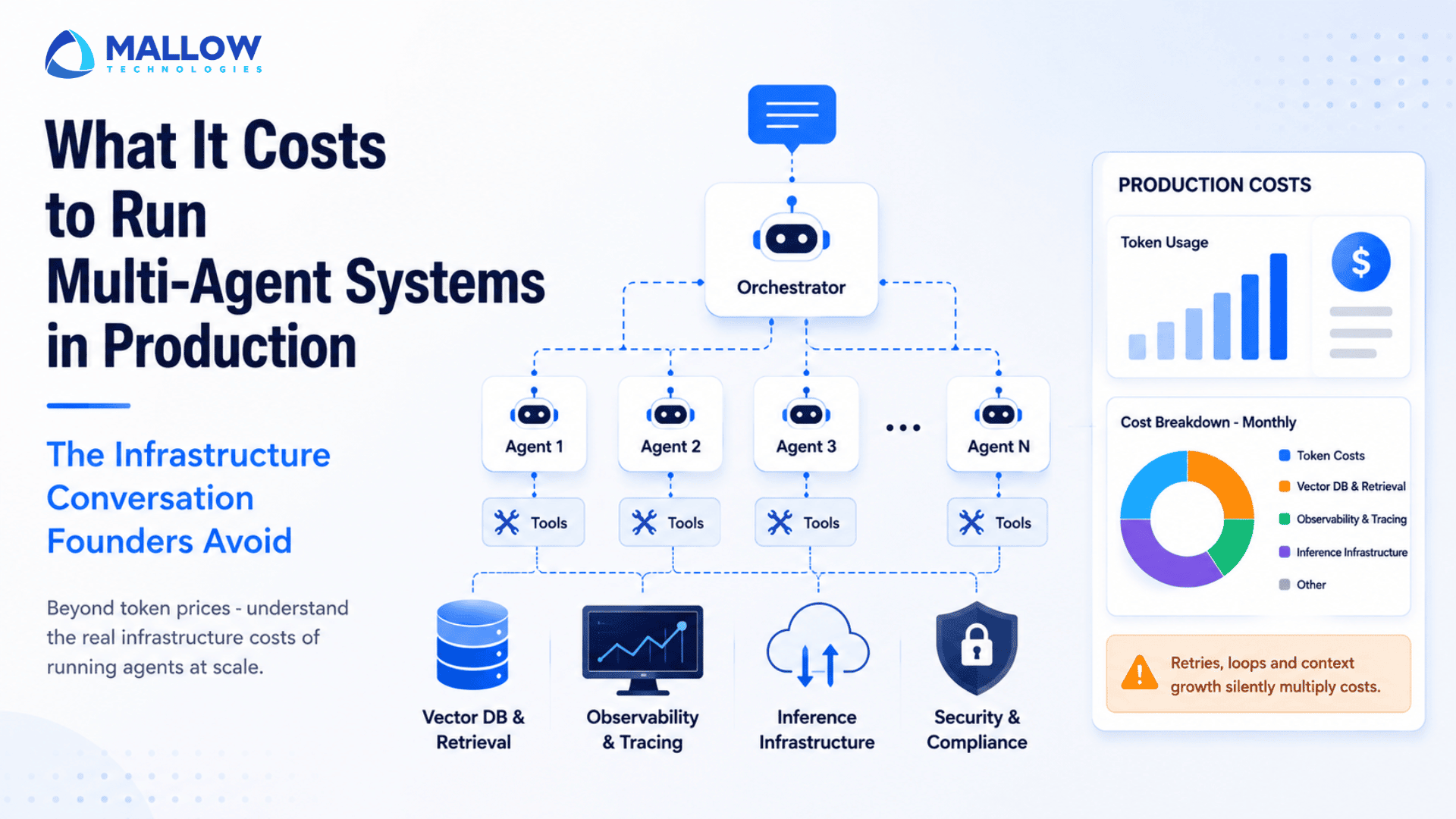
One of the more overlooked realities in enterprise AI adoption is that agentic workflows introduce substantial infrastructure complexity behind the scenes.
Reliable agentic systems often depend on –
- retrieval infrastructure
- orchestration layers
- observability pipelines
- memory systems
- vector databases
- permission-aware integrations
- monitoring frameworks
- scalable cloud infrastructure
Without strong operational architecture, agentic systems can become unreliable very quickly as workflow complexity expands.
This is one reason enterprises are increasingly investing in cloud-native AI infrastructure ecosystems from providers such as AWS, Google Cloud, and Microsoft Azure to support large-scale AI orchestration requirements.
Agentic AI is not simply a frontend interface upgrade. Organizations looking for practical orchestration examples can also explore real-world multi-agent workflow implementations already operating inside business software environments.
It is an infrastructure transformation.
How Mallow helps businesses build agentic AI workflows
At Mallow, we help organizations move beyond conventional automation by designing AI-driven workflow systems capable of contextual reasoning, orchestration, retrieval integration, and operational scalability. Whether businesses are exploring AI copilots, operational assistants, workflow orchestration systems, or enterprise-wide agentic ecosystems, we help architect solutions aligned with real operational complexity rather than isolated experimentation. If you are planning to evaluate or implement agentic AI within your enterprise environment, talk to an expert from our team to discuss your business requirements and workflow challenges.
Our teams work across –
- AI workflow orchestration
- retrieval-integrated architectures
- enterprise system integrations
- cloud-native AI infrastructure
- observability implementation
- governance and security planning
- operational AI engineering
Because enterprise agentic systems require much more than standalone language models, our approach focuses heavily on infrastructure maturity, workflow reliability, governance readiness, and long-term scalability from the beginning of the implementation lifecycle.
Your queries, our answers
An agentic AI workflow is a workflow system where AI agents can reason, retrieve information, coordinate actions, and adapt operational behavior dynamically instead of following only predefined rules.
Traditional automation primarily executes static workflows based on predefined logic, while agentic AI systems introduce contextual reasoning, memory, retrieval, and adaptive orchestration capabilities.
Most enterprises will likely adopt hybrid models where deterministic automation handles structured execution while AI agents manage adaptive reasoning and workflow coordination.
Retrieval infrastructure helps AI agents access current enterprise knowledge dynamically, improving contextual grounding, operational awareness, and workflow reliability.
Common challenges include governance, observability, permission management, retrieval quality, workflow orchestration complexity, and scalable infrastructure readiness.
What happens after you fill-up the form?
Request a consultation
By completely filling out the form, you'll be able to book a meeting at a time that suits you. After booking the meeting, you'll receive two emails - a booking confirmation email and an email from the member of our team you'll be meeting that will help you prepare for the call.
Speak with our experts
During the consultation, we will listen to your questions and challenges, and provide personalised guidance and actionable recommendations to address your specific needs.

Author
Jayaprakash
Jayaprakash is an accomplished technical manager at Mallow, with a passion for software development and a penchant for delivering exceptional results. With several years of experience in the industry, Jayaprakash has honed his skills in leading cross-functional teams, driving technical innovation, and delivering high-quality solutions to clients. As a technical manager, Jayaprakash is known for his exceptional leadership qualities and his ability to inspire and motivate his team members. He excels at fostering a collaborative and innovative work environment, empowering individuals to reach their full potential and achieve collective goals. During his leisure time, he finds joy in cherishing moments with his kids and indulging in Netflix entertainment.