Once a single AI agent is working reliably, the next question many teams ask is whether it is time to split it into multiple specialised agents. At first glance, the idea seems logical. Multiple agents promise better specialisation, parallel execution, and greater flexibility. But in practice, a multi-agent architecture is not automatically better. In many cases, it introduces additional coordination, debugging, governance, and operational complexity without delivering meaningful benefits.
This article is for the team that has one agent working and is now asking whether to split it. The answer, in most cases, is not yet. The split needs to be earned by a specific constraint the single agent cannot solve. It should never be chosen because the architecture feels more sophisticated or because multi-agent systems demo better. Both of those things are true, and neither of them is a reason to build one.
The default is single agent, and that default is right
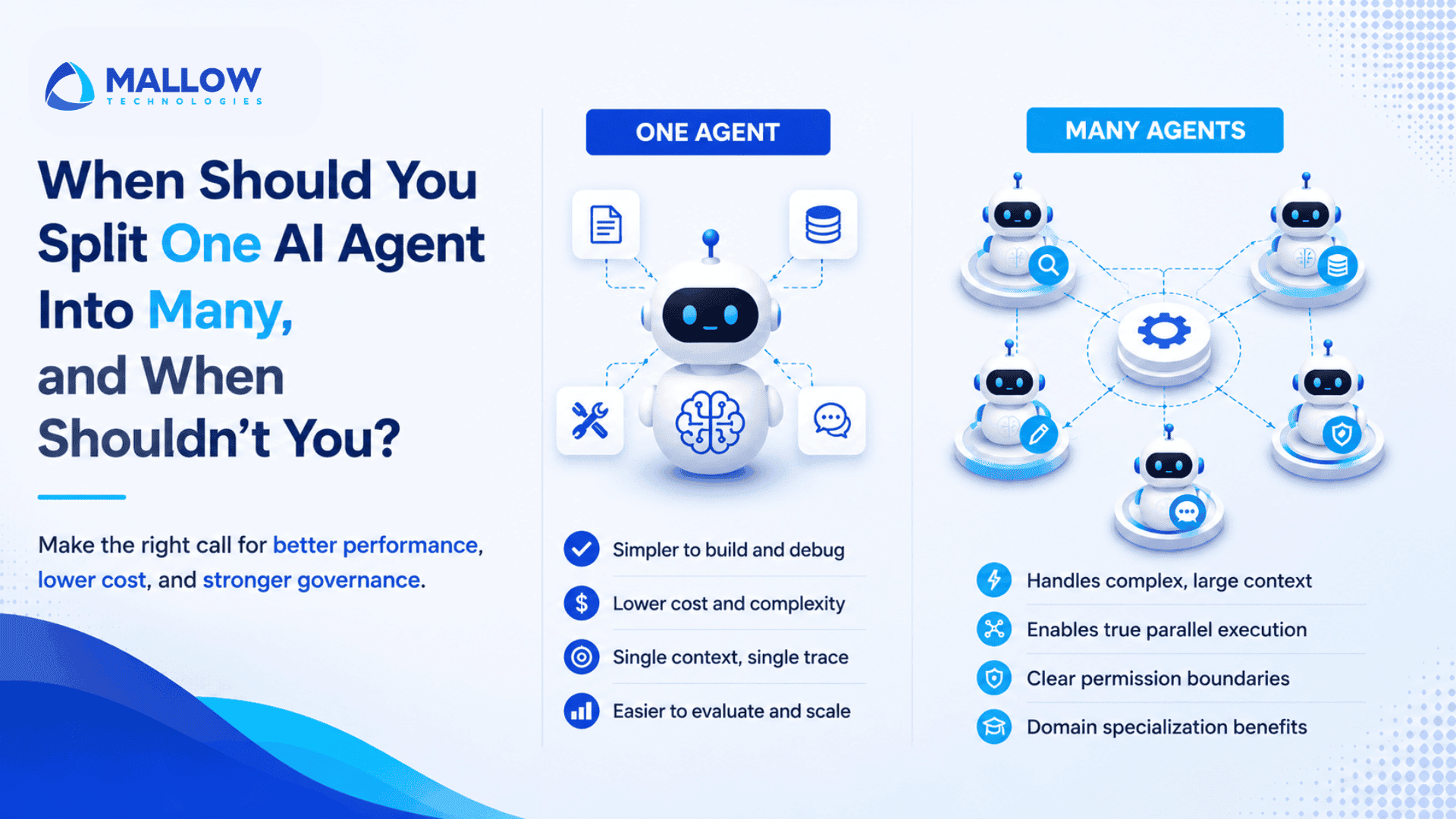
A single agent with well-designed tools is simpler to build, simpler to evaluate, and simpler to debug. When something goes wrong, there is one trace, one context window, one decision path to inspect. The failure is almost always findable. In a multi-agent system, a failure in the orchestrator’s task decomposition can cause downstream agents to fail, making issues significantly harder to trace and resolve.
The MIT Sloan Management Review and BCG 2025 research on the emerging agentic enterprise, which surveyed 2,102 executives across 21 industries and 116 countries, found that agentic AI adoption is proceeding faster than organisational readiness for the governance and oversight it requires. The architectural decision of single versus multi-agent is one concrete place where moving slower and more deliberately produces better outcomes than the adoption curve might imply.
The two clear signals that justify a split
These two signals are the ones with a strong enough case to justify the coordination overhead, the additional failure modes, and the expanded debugging surface that multi-agent architecture introduces.

Signal 1 – The single agent’s context is overloaded
Every agent operates within a context window. When a workflow grows to require dozens of tools, deeply specialised instructions, and extensive background knowledge across genuinely distinct domains, the agent starts performing worse on each individual task because its attention is spread too thin. The symptoms are consistent – accuracy drops on tasks that were previously reliable, the agent starts ignoring parts of its instruction set, and output quality becomes inconsistent in ways that do not trace to any specific failure.
Before treating context pressure as a reason to split, attempt the less disruptive fix first – organise the single agent’s tools into clearly scoped groups with sub-instructions per group. This often resolves context overload without the coordination overhead of a multi-agent split. The split becomes justified only when the tool grouping approach has been tried and has not resolved the performance degradation.
Signal 2 – Different steps in the workflow need different permission boundaries
Some workflows have a structural separation between the part that plans or drafts an action and the part that executes it. A customer communications agent that drafts a refund decision and an agent that actually processes the refund in the billing system are doing functionally similar things from a technical standpoint. But they should not be the same agent, because the permission to draft should be held separately from the permission to execute a financial transaction.
This is the cleanest justification for a split, because it cannot be solved by better tool organisation. A single agent holding read access to a knowledge base and write access to a payment processor in the same context is a design risk. The split here is not about performance. It is about access control and the principle that what an agent can propose should be structurally separated from what it can do without review.
Three more signals worth considering, at a higher bar
These three signals are real, but each of them requires a higher bar of evidence before they justify the coordination overhead of a multi-agent architecture.
Parallelisation opportunity
When a workflow genuinely decomposes into independent sub-tasks that do not share state, do not modify the same resources, and can be completed simultaneously without coordination between them, a multi-agent approach can reduce total latency significantly. Research synthesis, multi-source data gathering, and simultaneous drafting of independent document sections are real examples. The bar is that the tasks must be genuinely independent. If the output of sub-task A affects the approach to sub-task B, parallel execution produces coordination problems that outweigh the latency benefit.
Domain specialisation payoff
When a workflow spans two genuinely distinct domains that require fundamentally different evaluation standards, prompting strategies, and knowledge bases, a single agent serving both may serve neither well. A technical support workflow that requires deep product knowledge for diagnosis and entirely different communication patterns for customer interaction might benefit from specialised agents at each step. The bar is that the domains must be genuinely distinct in their requirements, not just different in their subject matter.
Scale isolation
When one part of a workflow experiences demand spikes that are structurally unrelated to other parts, isolating the high-demand component as a separate agent allows it to scale independently. The bar is that the scaling profiles must be measurably different in production, not speculatively different in a planning document.
Five reasons teams split that they should not
These are the most common reasons teams decide to go multi-agent. None of them justifies the architecture.

It feels more sophisticated
The appeal of designing an orchestrator that dispatches to specialised worker agents is real. It is a more interesting engineering problem than tuning a single agent. It also introduces multiple new failure modes, requires inter-agent communication protocols, and expands the governance surface significantly. Architectural complexity should be a cost, not a design goal.
The team wants to future-proof for scale
Building for the scale you do not have yet is a reliable way to spend engineering time on infrastructure that either never gets used or has to be rebuilt anyway when the real scale constraints become clear. Gartner predicts that 40% of agentic AI projects will be canceled by the end of 2027, primarily due to cost, unclear business value, and inadequate risk controls. Over-engineered architecture is a contributing factor to all three of those failure modes.
Debugging seems easier when agents are separated
The logic is appealing – if something breaks, you know which agent to look at. In practice, the most common failure mode in multi-agent systems is not a single agent failing in isolation. It is the orchestrator’s task decomposition producing a sequence of plausible-looking outputs from individual agents that collectively produce the wrong result. Debugging that failure requires tracing across all agents simultaneously, which is harder than debugging a single-agent failure.
Different teams own different parts of the workflow
Organisational boundaries are a real consideration in how work gets built and maintained. They are not an architecture constraint. An agent owned by the customer team and an agent owned by the engineering team is a staffing model, not a reason to incur the coordination overhead and additional failure modes of inter-agent communication.
Multi-agent demos better
This is accurate and irrelevant. The demo advantage of showing multiple specialised agents collaborating does not survive contact with the production debugging session, the increased latency from inter-agent calls, or the cost of maintaining an orchestrator that has to do task decomposition correctly every time.
The build sequence that changes the outcome

The most consistently cited guidance from engineering teams that have shipped successful multi-agent systems in production is a sequencing recommendation rather than an architecture recommendation – build single-agent first with rigorous evaluation instrumentation, identify the specific query classes or workflow segments in which the single agent fails, and then consider whether a multi-agent architecture solves those specific failures.
That sequence matters because the evaluation instrumentation built during the single-agent phase provides the evidence needed to improve routing decisions as systems become more sophisticated. As highlighted in Arize AI’s guidance on building production-ready AI agents, successful deployments rely on strong orchestration, observability, and evaluation to understand how agents behave in production before introducing additional complexity. Teams that establish these practices with a single-agent baseline are better positioned to evolve into reliable multi-agent systems.
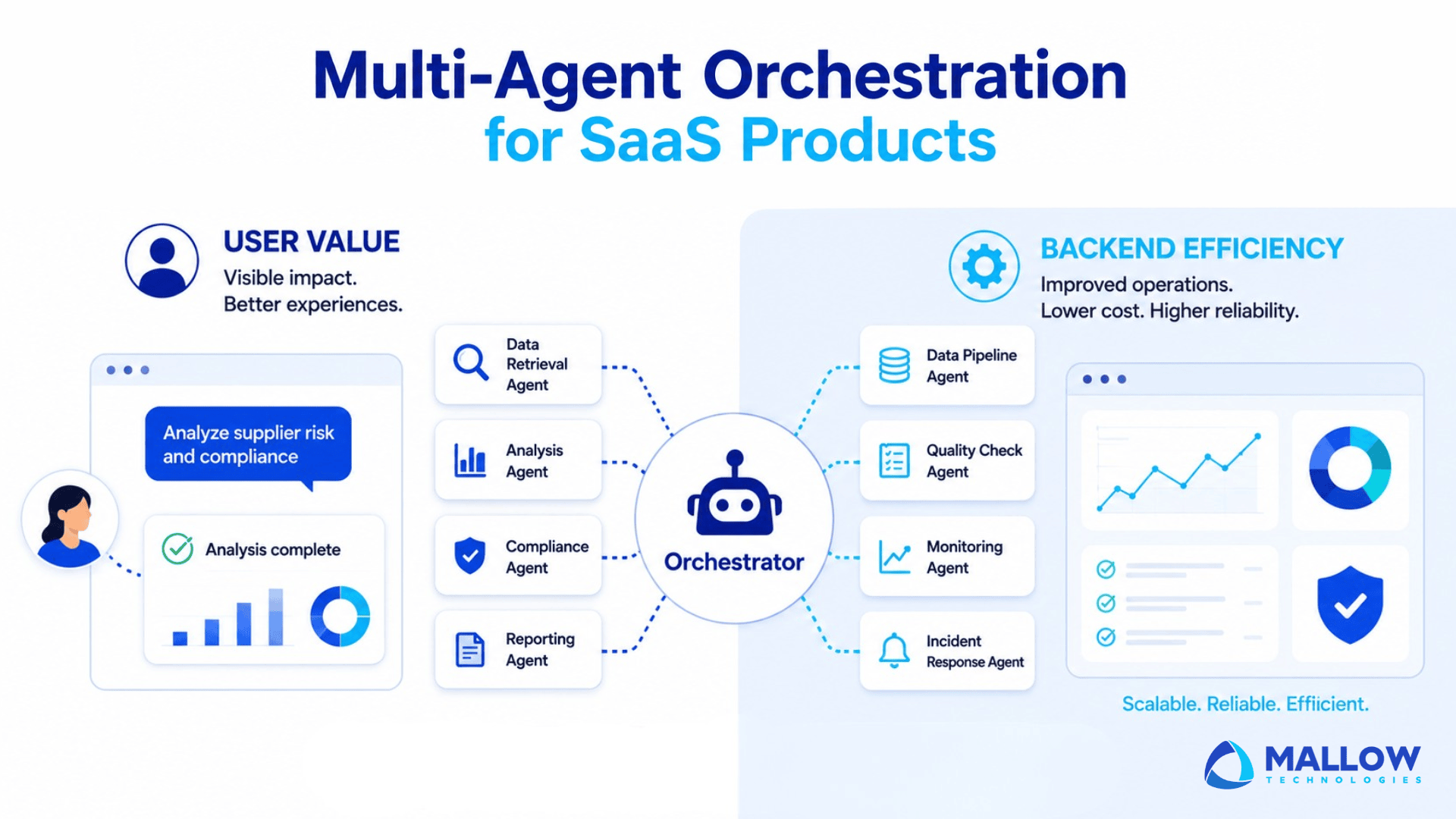
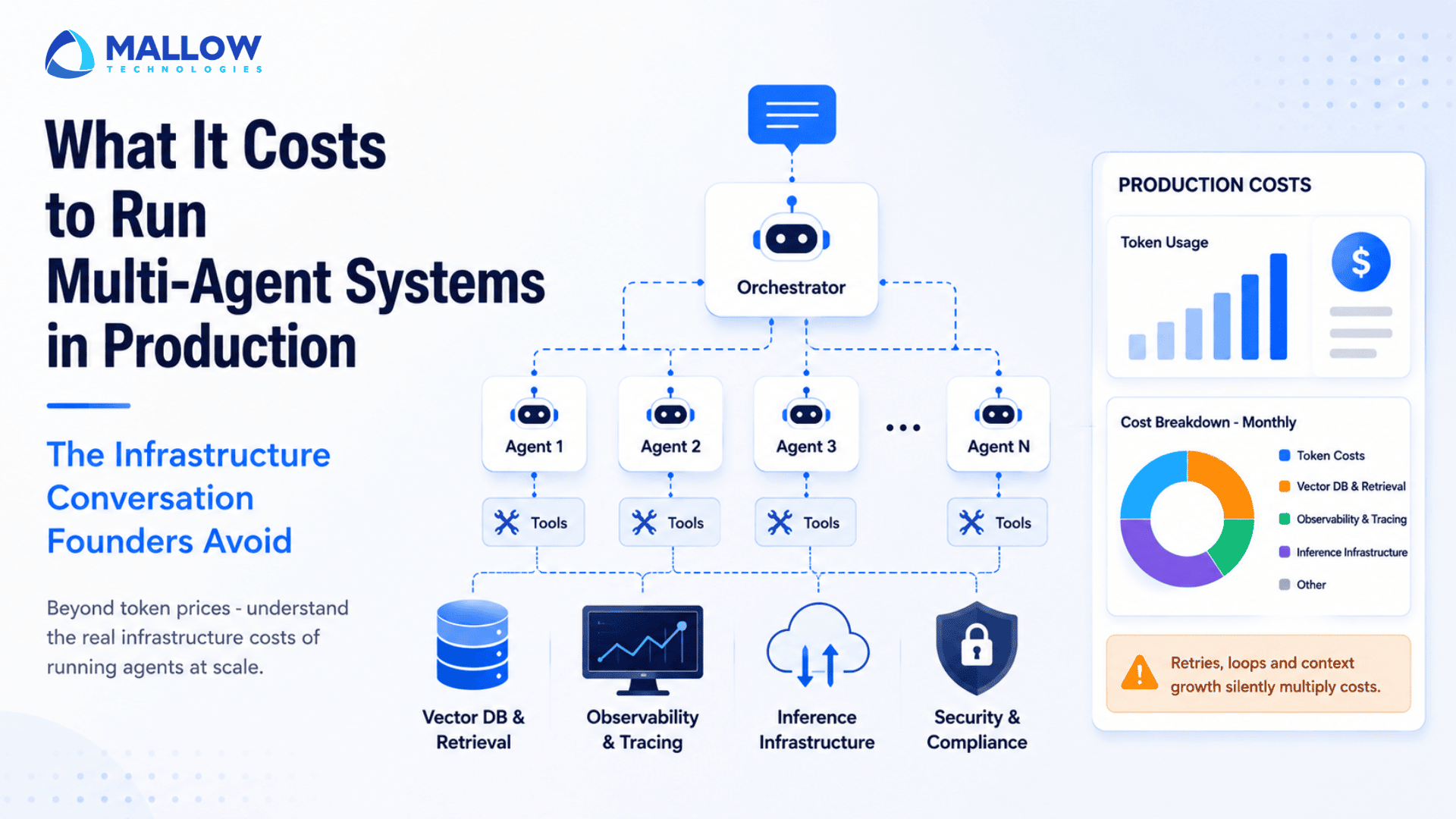
The hub-and-spoke pattern, where a central orchestrator dispatches tasks to specialised worker agents and aggregates their outputs, dominates production deployments in 2026 for a reason – it keeps the coordination surface manageable and gives the team one place to reason about task decomposition. The more distributed peer-to-peer mesh patterns are used in academic research and in a small fraction of enterprise deployments where specific fault-tolerance requirements justify the significantly higher complexity.
The question that cuts through most of this

If the discussion in your team is about whether to split an agent, ask this question first – has the single agent hit a specific wall it cannot cross, or does the split feel like the right direction?
If the answer is a specific wall, describe the wall in one sentence. If you can describe it, it is probably a real constraint. If the description requires two paragraphs of architectural reasoning, it is probably not a constraint yet. It is a preference.
Context overload with a measurable performance drop is a real wall. A permission boundary between drafting and execution is a real wall. A genuine parallel structure in the task that a single sequential agent cannot exploit is a real wall. “This feels like it should be two agents” is not a wall.
Choose the simplest architecture that solves the problem
Two-thirds of the agentic AI market now runs on coordinated multi-agent systems. That figure reflects where production deployments have landed after iteration, failure, and refinement. It does not mean your first agent deployment should be multi-agent. Most of those coordinated systems started as single agents, hit specific walls, and split to solve those specific problems. The teams that tried to skip that sequence spent more to build less reliable systems and debugged them for longer.
If you are evaluating whether your current agent architecture needs to split, or designing an agentic workflow from scratch or thinking about how to structure it, connect with our experts. We’ll help you determine the right architecture for your use case and build AI agents that balance performance, governance, and long-term maintainability.
Your queries, our answers
Run the agent on a consistent set of evaluation cases and check whether performance is notably lower on cases that arrive late in long conversations compared to short ones. If late-position cases degrade significantly, context pressure is a real factor. If performance is consistent regardless of position, the problem is likely in instruction quality or tool design, not context window pressure.
Not a universal one. The right threshold is a performance degradation you can measure, not a count of tools or workflow steps. Some single agents handle dozens of tools reliably. Some need to be split at five. The ceiling depends on the quality of the tool grouping, the instruction clarity, and the specificity of the tasks.
Each agent in a multi-agent system needs its own owner, its own out-of-scope list, and its own quality review cadence. Governance does not simplify when you split. It multiplies. That is a real operational cost that should be factored into the build decision before the architecture is chosen, not after.
Yes, but the rework is significant. Inter-agent communication protocols, orchestrator logic, and separate tool configurations all have to be unwound and reconsolidated. This is one of the strongest practical arguments for defaulting to single-agent first. The refactor from single to multi is smaller than the refactor from multi back to single.
At enterprise scale with genuinely distinct workflow domains, multiple teams with independent ownership requirements, and measurably different load profiles across workflow segments, multi-agent architecture is often the right default. For a Seed-to-Series-B SaaS team with one or two agents, those conditions almost never apply yet.
What happens after you fill-up the form?
Request a consultation
By completely filling out the form, you'll be able to book a meeting at a time that suits you. After booking the meeting, you'll receive two emails - a booking confirmation email and an email from the member of our team you'll be meeting that will help you prepare for the call.
Speak with our experts
During the consultation, we will listen to your questions and challenges, and provide personalised guidance and actionable recommendations to address your specific needs.

Author
Jayaprakash
Jayaprakash is an accomplished technical manager at Mallow, with a passion for software development and a penchant for delivering exceptional results. With several years of experience in the industry, Jayaprakash has honed his skills in leading cross-functional teams, driving technical innovation, and delivering high-quality solutions to clients. As a technical manager, Jayaprakash is known for his exceptional leadership qualities and his ability to inspire and motivate his team members. He excels at fostering a collaborative and innovative work environment, empowering individuals to reach their full potential and achieve collective goals. During his leisure time, he finds joy in cherishing moments with his kids and indulging in Netflix entertainment.