Every roadmap review has the same moment. Three good ideas, one quarter of engineering time, and a conversation about which two get cut. For most of software history, that tradeoff was the entire point of roadmapping. Prioritization frameworks like RICE and WSJF all ask some version of the same question: how much value do we get for how much effort. Effort was the scarce resource, so whichever framework scored effort most honestly tended to win the argument in the room.
That assumption is starting to come apart. AI agents are now doing real work inside the planning process itself, not just inside the codebase. They can spike a feature, stitch together a working prototype, and surface real usage signal in days instead of sprints. When the effort side of that ratio shrinks for a growing share of the backlog, the framework stops doing the job it was built for. This isn’t a story about agents replacing product managers. It’s a story about what happens to a planning process once its core constraint quietly disappears, and what a founder running a lean SaaS team needs to change before that gap catches up with them.
The constraint roadmaps were built around is disappearing

RICE, WSJF, Kano – every popular prioritization model treats engineering effort as the denominator. That made sense for decades, because building anything, even a rough version, took real calendar time. A design pass, a ticket, a sprint, a release.
Agents change the size of that unit. According to Product School, product teams using AI in discovery report compressing a research cycle that used to take weeks down to hours, which means they can test five ideas in the time it used to take to test one. A founder can ask an agent to mock up three different onboarding flows, wire up the happy path, and have something a real user can click through, all inside a single working day.
The cost of finding out whether an idea works has fallen faster than the cost of building it for real. For early-stage SaaS teams, that’s the number that actually matters. The practical effect: when ten backlog items all cost roughly the same small amount to test, your effort score stops discriminating between them. The framework still spits out a ranked list. It just increasingly reflects who wrote the sharpest one-line pitch, not which idea deserves next quarter’s engineering time.
Roadmaps are turning into hypothesis logs
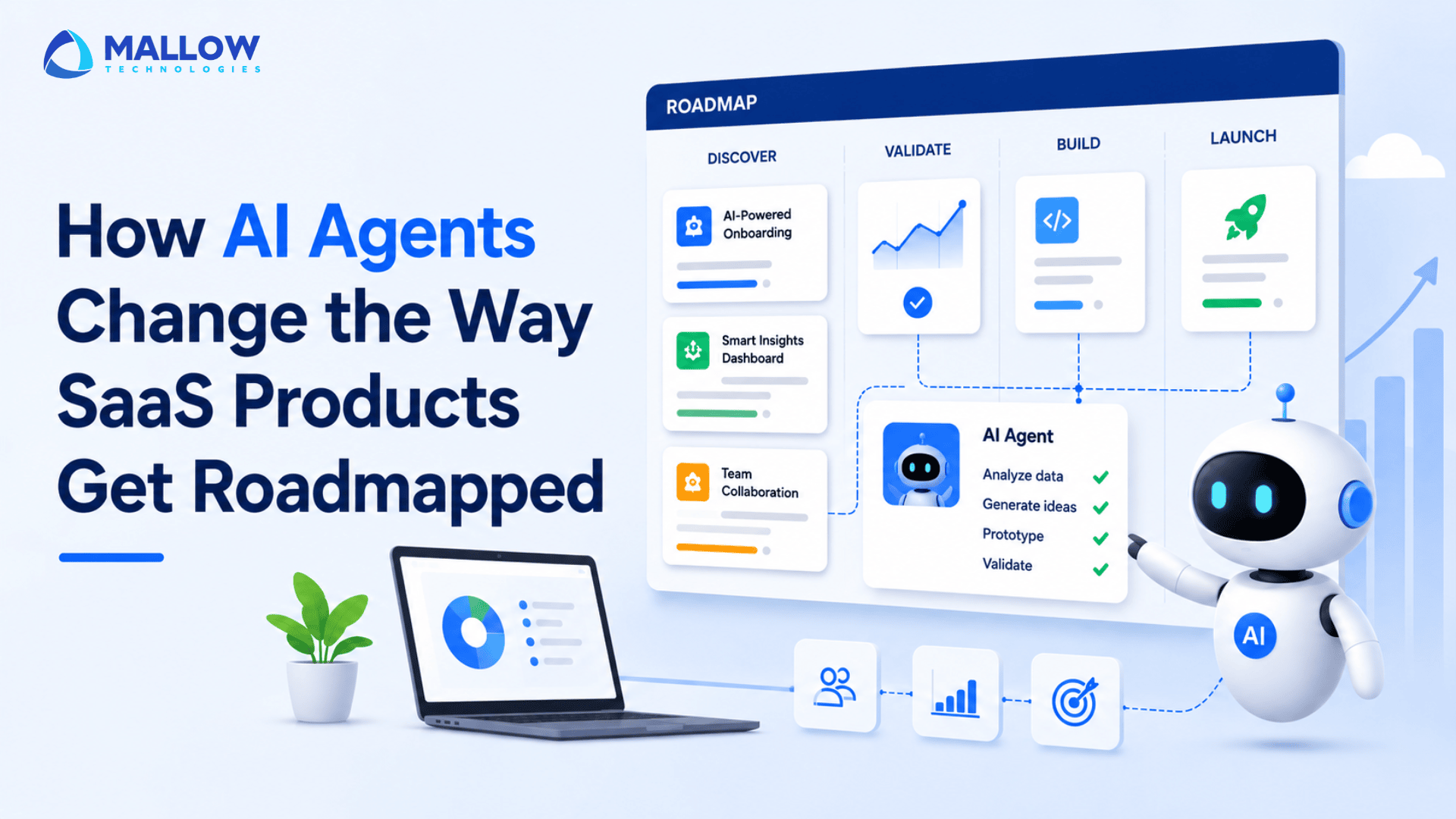
The response we’re seeing in teams that have leaned into this is to stop treating the roadmap as a capacity allocation document and start treating it as a running list of hypotheses with a status attached: testing, validated, killed, scaling.
Continuous discovery isn’t a new idea in product management. What’s new is that agents make it executable on a small team’s timeline, not just a well resourced enterprise one. According to Productboard’s guide to AI workflows for product discovery, some product teams now point an agent at session replay data to do a first pass on behavioral patterns, surfacing friction points and clusters before a human ever opens a recording, and treat that output as a filter rather than a final answer. That distinction matters. The agent narrows what a founder or PM needs to look at personally. It doesn’t replace the judgment call about what the data means.
For a Seed to Series B team, this changes what a quarterly roadmap review is actually for. Instead of defending a list of commitments made three months ago, the conversation becomes: which hypotheses did we validate, which did we kill, and what’s worth testing next. The document stops being a promise and starts being a log.
The bottleneck didn't disappear, it moved
None of this makes roadmapping easier. It means the place teams get stuck moved from “can we build it” to “should we trust what we built, and can we ship it without breaking something else.” Gartner’s 2026 CIO survey found that only 17% of organizations have actually deployed AI agents so far, even though more than 60% expect to within two years, a gap that points less at what agents can do and more at the decisions sitting around them – governance, integration, trust.
PwC’s research on enterprise agent adoption shows confidence varies sharply by task. Leaders are far more comfortable delegating data analysis or performance work than anything touching financial transactions or direct customer interaction. The same split shows up at the roadmap level. Founders get comfortable letting an agent prototype a feature fast. They get a lot more careful about letting an agent’s output decide what ships to every customer this quarter, and they should.
PwC’s 2026 AI performance study, based on over a thousand senior executives, found that nearly three-quarters of the economic value created by AI is captured by just one-fifth of organizations. The difference wasn’t tool access. The companies pulling ahead were nearly three times more likely to have increased the number of decisions made without human review, and that speed was backed by a defined governance framework, not the absence of one. Translated to a SaaS roadmap: speed without a clear ownership model for what an agent is allowed to decide doesn’t produce a faster roadmap. It produces a roadmap nobody fully trusts, which slows the next decision down even more.
What's actually different in agent assisted roadmapping right now

A few specific shifts are worth naming because they change what to do differently this quarter, not just how to think about it.
The backlog gets noisier before it gets better. When testing an idea costs almost nothing, more half formed ideas survive long enough to reach the roadmap document. As AI agents make rapid experimentation easier, product teams need stronger filtering mechanisms to separate promising ideas from short lived opportunities.
Effort estimates need a second column. Instead of a single effort score, separate cost to validate from cost to ship safely at scale. Agents have compressed the first number far more than the second. A feature that takes two hours to prototype can still take weeks to integrate, monitor, and support in production.
Autonomy decisions belong on the roadmap, not buried in a tooling document. If your roadmap assumes agent assisted velocity, it should explicitly define where human review is required before something reaches a customer. Clear governance is just as important as faster validation.
Vendor and build decisions move earlier. As AI agents become part of the product development workflow, decisions about whether to build capabilities in house or adopt third party AI platforms now influence roadmap planning much earlier than before. These infrastructure decisions increasingly shape feature priorities rather than following them.
What to actually change in how you plan

Treat the roadmap as two layers, not one. A fast validation layer, where ideas get tested in days using agent-assisted prototyping, and a slower commitment layer, where something earns a place in production only after it survives validation and an integration review. Conflating the two is what makes a roadmap feel chaotic the moment agents enter the picture.
Stop scoring effort with a single number. Score validation cost and production cost separately, even roughly. The gap between them tells you more about real risk than either number alone.
Decide autonomy boundaries before you need them. Write down, in the roadmap document itself, what an agent is allowed to ship without a human review and what always requires one. Founders who skip this end up making the decision under pressure, mid-incident, which is the worst time to make it.
Keep someone accountable for the why, not just the what. Agents are good at surfacing what’s possible and what users are actually doing. They are not the ones who should own why a feature exists or what it’s supposed to do for the business. That judgment call is still the founder’s or product lead’s to make, and it’s the part of roadmapping that hasn’t gotten any faster.
Why modern SaaS roadmaps need a new planning approach
The shift here isn’t that AI agents make roadmapping faster in some uniform way. It’s that they’ve quietly removed the assumption every prioritization framework was built on, and most teams are still running the old framework on a backlog that no longer behaves the way it used to. The founders who get ahead of this aren’t the ones with the most agent tooling. They’re the ones who separate validation speed from production discipline early and build a planning process that can tell the difference.
If you’re exploring how AI assisted planning can fit into your SaaS product strategy, connect with our team to discuss the right approach for your business.
Your queries, our answers
No. They change what gets validated cheaply, which shifts a PM's time from estimating effort toward deciding which validated ideas deserve production investment.
Some teams report compressing discovery cycles that used to take weeks down to hours, though the speed gain concentrates in early validation, not in the integration and support work that follows.
Not necessarily. It's most useful for ideas with real uncertainty about user behavior. Well-understood, low-risk work often doesn't need the extra step.
Treating validation speed as production readiness. The organizations capturing the most value from AI are also the ones with the strongest governance and review practices, not the ones moving fastest with the least oversight.
Many teams are moving to a faster review cadence for the validation layer, while keeping a slower quarterly cadence for what actually reaches production.
What happens after you fill-up the form?
Request a consultation
By completely filling out the form, you'll be able to book a meeting at a time that suits you. After booking the meeting, you'll receive two emails - a booking confirmation email and an email from the member of our team you'll be meeting that will help you prepare for the call.
Speak with our experts
During the consultation, we will listen to your questions and challenges, and provide personalised guidance and actionable recommendations to address your specific needs.

Author
SathishPrabhu
Sathish is an accomplished Project Manager at Mallow, leveraging his exceptional business analysis skills to drive success. With over 8 years of experience in the field, he brings a wealth of expertise to his role, consistently delivering outstanding results. Known for his meticulous attention to detail and strategic thinking, Sathish has successfully spearheaded numerous projects, ensuring timely completion and exceeding client expectations. Outside of work, he cherishes his time with family, often seen embarking on exciting travels together.